


When an Obi Becomes Art: Shihori Suzuki and the Creation of Obi-Art
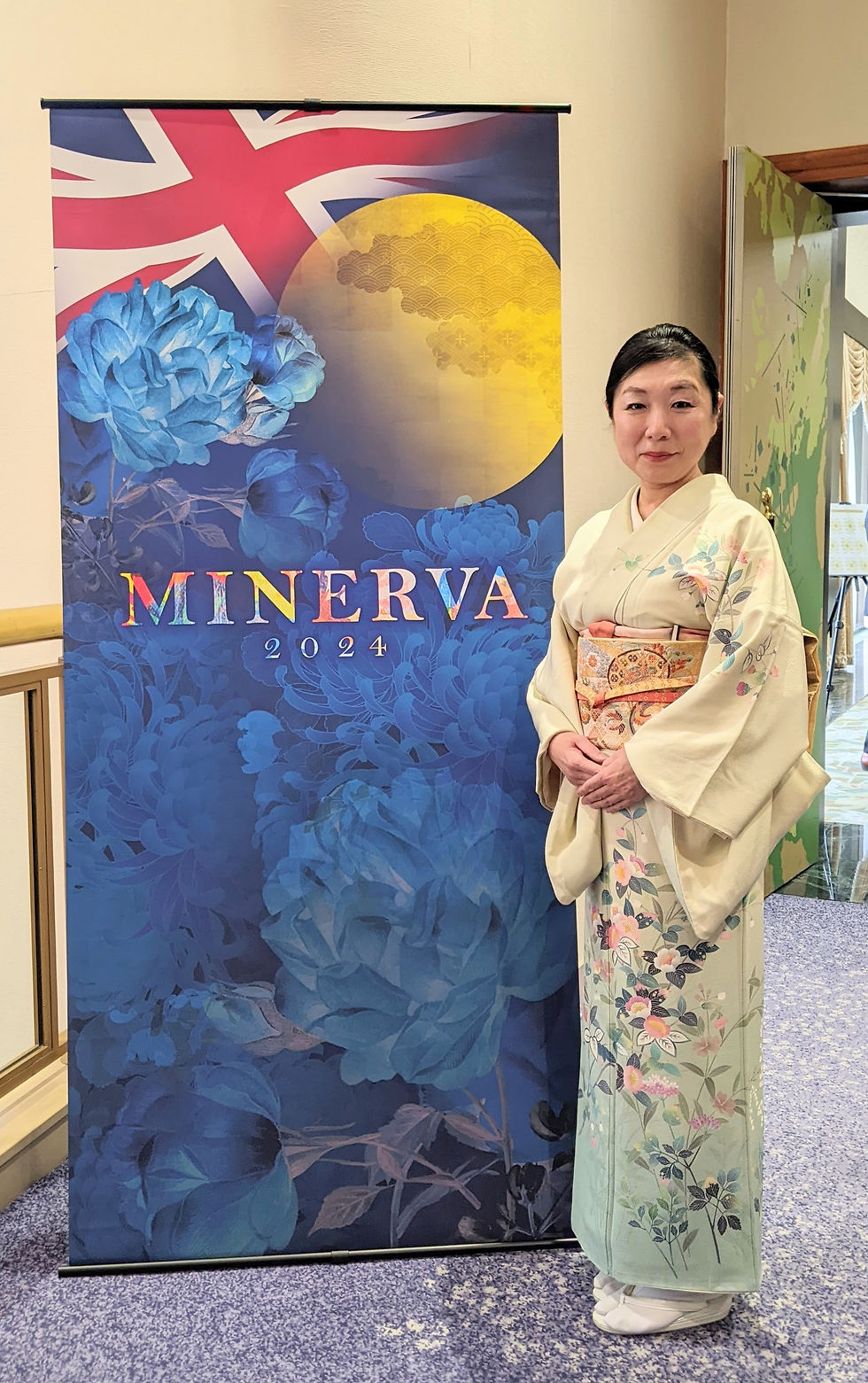
An artist shaped by Japan's cultural traditions who created a new way to see one of its most recognisable textiles.
By BeART World JOURNAL
An obi is made to be worn. Wrapped around a kimono, it holds the garment together while carrying its own world of colour, pattern, texture, and craftsmanship. For generations, these textiles have been part of Japanese dress and material culture, carrying the knowledge of makers, the beauty of intricate design, and, in many cases, traces of the lives in which they were worn.
But in the hands of Shihori Suzuki, an obi takes on another life. Known professionally as Shihori, she is the originator of Obi-Art, an original art form she created by bringing together vintage obi and artificial flowers. The idea is simple to describe, but its significance lies in the transformation itself: a textile associated with Japanese tradition becomes the foundation for a new visual language.
She did not simply adopt an existing artistic category. She created one.
Her story is therefore not only about making something new. It is about what can happen when a long relationship with tradition becomes the foundation for seeing it differently.
Beauty Learned Early
There are some things we inherit before we fully understand what they will mean to us. A way of arranging flowers. The quiet ritual of preparing tea. An appreciation for balance, space, and the small details that can change the feeling of an entire composition. For Suzuki-sensei, these experiences began early. Her mother introduced her to Japanese cultural arts, including ikebana and the tea ceremony, helping cultivate an appreciation for the relationship between nature, form, and design.
These were not simply lessons about aesthetics. They encouraged attention: to how individual elements relate to one another, how space can become part of a composition, and how restraint can sometimes reveal more than excess. Those early experiences became part of the foundation from which her later artistic work developed. Her education also brought her into contact with a wider cultural world. She studied in the English Department at Kwassui Women's College in Nagasaki, immersing herself in English literature in a city with a long history of international exchange. That experience added another dimension to her perspective, bringing her into contact with different cultures and ways of understanding the world. The traditions she had grown up with remained central to her journey. But her path was never limited to simply repeating what she had inherited.
Learning the Language of Flowers
Flowers continued to guide her path. In 2000, she became certified as an ikebana instructor through the Saga Goryu school, marking an important milestone in her professional journey.
Ikebana demands more than technical skill. It requires attention to composition, space, material, and the relationship between individual elements. A slight change in placement can alter the entire work, while what is left empty can be as important as what is present.
Over time, these principles became part of her visual sensibility. Her understanding of balance and arrangement would remain with her, eventually finding expression beyond the traditional forms in which she first encountered them. She had learned the language of flowers. The question was where else that language could lead.
The Moment the Obi Became a Medium
The central development in her artistic story began with the obi. An essential part of traditional Japanese dress, an obi can carry intricate patterns, carefully woven threads, colour, texture, and generations of craftsmanship. It is closely connected to the kimono, yet a vintage obi also exists as an object with its own material presence and history.
She saw in these textiles the possibility of another form of expression. Drawing on her experience with Japanese cultural arts and floral composition, Suzuki-sensei originated Obi-Art, bringing vintage obi and artificial flowers together in one-of-a-kind works. This is an important distinction. Obi-Art is not simply her personal style within an existing genre. It is an original art form that she created.
Within these compositions, the obi is no longer functioning solely as part of a kimono ensemble. Its woven surface, patterns, and textures become part of a new visual relationship. The floral elements introduce another dimension, bringing the language of flowers into conversation with a textile already rich in craftsmanship and cultural associations. The past is not erased. It is carried into another form.
A CLOSER LOOK AT OBI-ART

An example of Shihori Suzuki's original Obi-Art, where vintage obi and floral elements come together in a new artistic composition.
Creating Something New From What Came Before
This is where her story moves beyond preservation. Tradition shaped the foundation of her work, but she did not stop at reproducing what she had inherited. The cultural arts she had studied gave her one language. Her relationship with flowers and composition gave her another. The beauty and craftsmanship of vintage obi provided the material. Bringing these elements together as a new art form was her own act of creation.
Obi-Art became an artistic language rooted in heritage, yet not bound by an existing form.
This may be what makes her journey especially compelling. She did not have to choose between honouring the past and creating something new. She did both. The work does not ask the obi to leave its history behind. Its patterns remain visible. Its craftsmanship remains part of what gives the material its presence. But by placing it in a different context, she invites us to encounter it again. Not only as something that was. But as something that can still become.
Between Flowers and Fabric
In Obi-Art, flowers and fabric come together to create a dialogue between different ideas of time. Flowers can remind us of beauty that changes with the seasons and never remains exactly the same. A vintage textile, meanwhile, can carry a sense of endurance, memory, and continuity. Her work brings these qualities into the same composition.
The texture and patterns of the obi influence how the flowers are experienced, while the floral elements invite us to see the textile differently. Neither exists merely as decoration for the other. Instead, each changes our relationship with what surrounds it. Here, the influence of her background in Japanese cultural arts becomes visible again. Balance, relationship, and space remain important, but they have become part of an artistic language that is distinctly her own. She is not simply placing flowers beside an obi. She is creating a new relationship between them.
Giving Cultural Materials Another Life
There is a difference between preserving something unchanged and allowing it to continue through new forms. Her work exists in that space. When a vintage obi becomes part of Obi-Art, its history is not removed. The patterns, craftsmanship, and cultural associations remain present. Yet the material is given a different role, becoming part of a composition intended to be encountered as art.
Perhaps there is something universally human in this idea. Many of us carry something from the past: a gesture learned from a parent, a recipe remembered years later, a language, or a particular way of welcoming someone into our homes. Sometimes we preserve these things exactly as we received them. Sometimes they change as they pass through us. What remains may not look exactly the same. But the connection is still there. Her work reminds us that transformation does not necessarily mean rejection. Sometimes, changing the form is another way of carrying something forward.
Recognition Beyond the Studio
Over the years, her work has received recognition through exhibitions, awards, publications, and media features. In 2020, she was selected in connection with the Paris Orsay Museum's 30th Anniversary of World Heritage Registration. In 2022, she received the Japan-Mongolia Education and Culture Art Gold Award at the Japan-Mongolia International Education, Culture, and Art Festival. Her work has also appeared in publications including Bijutsu no Mori Magazine and Japan Artistic Creation Vol.28, and was featured in the virtual Japanese Artistic Creation Museum. It has additionally been introduced through Japanese media platforms including HTB, STV, and UHB.
These milestones show how her work has travelled beyond its point of origin. But the most distinctive achievement remains the art form itself. Recognition can tell us where an artist's work has been seen. Obi-Art tells us what she created.
What Can Continue to Change
Today, based in Sapporo, Hokkaido, Suzuki-sensei continues her work across different areas of Japanese cultural expression. Her journey has moved through ikebana, the tea ceremony, literature, floral expression, and ultimately the creation of her own original art form. Her story offers a perspective on tradition that is neither about abandoning the past nor simply reproducing it. The cultural forms that shaped her provided a foundation. From that foundation, she developed something of her own.
That may be the clearest way to understand Obi-Art. It does not exist outside tradition, but neither is it confined by the exact forms tradition has taken before. The obi remains connected to craftsmanship and cultural memory, while her artistic intervention allows it to enter another creative life. What else could an obi become? In her hands, it became art.
Not by leaving its history behind, but by carrying it somewhere new.
About the Creator
Shihori Suzuki
Artist · Originator of Obi-Art · Sapporo, Hokkaido, Japan
Shihori Suzuki is an artist and certified ikebana instructor who originated Obi-Art, an original art form combining vintage obi and artificial flowers. Drawing on her background in Japanese cultural traditions and floral expression, she creates one-of-a-kind works that explore heritage, transformation, and the possibility of creating something new from what came before.

